

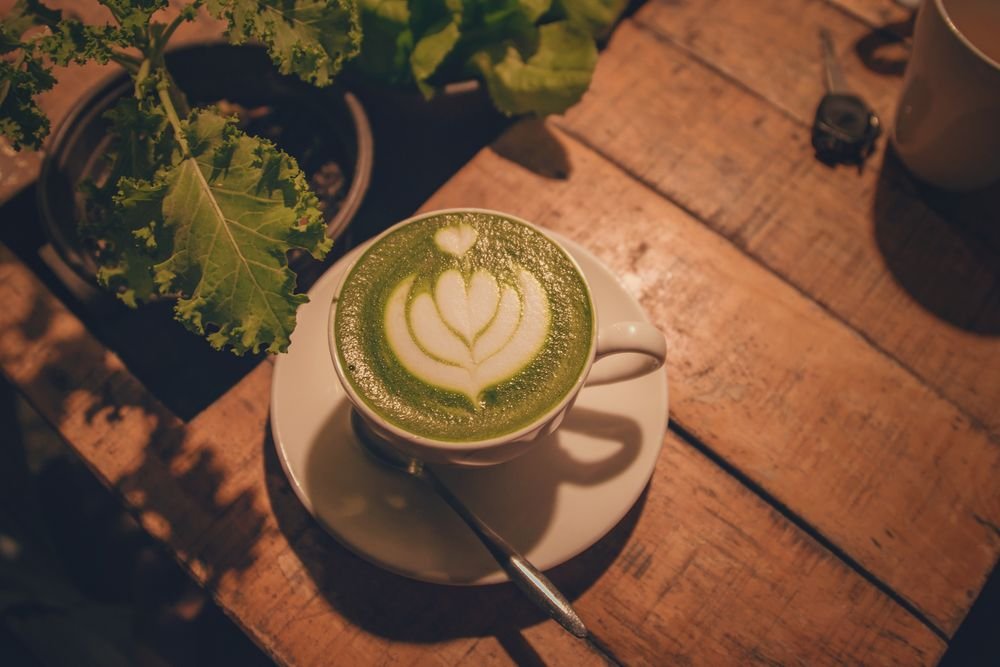
Matcha lattes are on more menus than ever. Matcha content fills social feeds daily. And yet, the tea behind all of it is harder to source, more expensive, and in some cases not what the label claims. That gap between demand and reality is exactly what this article breaks down.
Here is what you need to know: what the shortage actually is, why it happened, what it has done to prices and quality, how long it might last, and how to buy real matcha without getting misled.
The Shortage Is Real, But It Does Not Cover All Matcha
Before anything else, it helps to be specific about what is actually running short. The shortage applies to ceremonial-grade tencha — the shade-grown tea leaf that gets stone-milled into high-quality matcha powder. That is the product in short supply.
Culinary-grade matcha and generic green tea powder are still more widely available. This is not a situation where all matcha has disappeared from the market.
In fact, Japan’s overall green tea exports rose 42% in volume in 2025, with export values roughly doubling to about ¥84.7 billion. The country is producing and exporting more tea than ever. The structural undersupply sits at the top of the quality pyramid, not across the board.
The Global Japanese Tea Association, drawing on data from Japan’s Ministry of Agriculture, Forestry and Fisheries (MAFF), has described this as the first matcha shortage of its kind in history, beginning around autumn 2024 and continuing through 2026.
Why Demand Exploded Faster Than Farmers Could React
The demand side of this story is straightforward, and the numbers make it easy to understand the scale of what happened.
The global matcha market was estimated at $4.3 billion in 2023 and is projected to nearly double by 2030. In the United States alone, retail matcha powder sales rose 86% over three years, and matcha has outsold coffee in some cafés.
The at-home matcha market grew from roughly $130 million in 2023 to $200 million in 2025. Consumer interest in matcha on social platforms rose approximately 19% year-over-year. That is sustained, compounding growth — not a one-month trend.
Social media and café culture drove this wave together. When a drink goes viral repeatedly and gets added to menus across multiple countries at the same time, demand builds fast. Tea farming cannot move at that speed. That mismatch is the core of the problem.
Why Supply Cannot Simply Catch Up
This is the part that explains why the shortage will not resolve itself quickly, no matter how much money enters the market.
Tea Bushes Take Years to Mature
Tencha bushes take approximately five years to reach full production. Farmers who planted new fields in 2024 or 2025 will not see full yields until around 2029 or 2030. There is no shortcut.
Think of it like newly planted wine vines. If demand for a specific region’s wine suddenly skyrockets, you cannot rush the vines to maturity. The product takes the time it takes. Tencha works the same way.
Only a Small Number of Farmers Grow It Well
High-quality tencha is produced by a relatively small group of Japanese farmers, concentrated in specific regions: Uji, Nishio, Yame, and Wazuka. These are not interchangeable with standard green tea farms. The cultivation method, shading process, and regional conditions all matter.
Even within Japan, the number of farmers who specialize in tencha at the level required for ceremonial matcha is limited. Expanding that base takes time, training, and infrastructure.
Stone Milling Is a Bottleneck Too
Grinding tencha leaf into the ultra-fine powder that becomes matcha is done with stone mills. That milling capacity has not kept pace with demand. Even if there were enough leaf, the ability to process it into powder fast enough is its own constraint.
Climate and Aging Farmers Add Pressure
Climate change is reducing the land suitable for growing Camellia sinensis, the plant used for tea. Unusual frosts, heavy rains, and shifting temperatures have made harvests less predictable in regions like Wazuka, where steep hillside farms are already difficult to manage.
At the same time, many tea farmers in these historic regions are aging. There is a shortage of younger workers willing to take on the demanding physical labor of tea cultivation. This demographic problem compounds everything else, making it harder to expand production even when the economic incentive is clearly there.
What the Shortage Has Done to Prices and Product Quality
The effects show up in real and concrete ways, whether you are buying matcha at a café or ordering it online.
Prices Have Climbed Significantly
Average prices for first-flush tencha in Kyoto nearly tripled between 2014 and 2025. Tencha auction prices hit record highs in 2025 and are holding at elevated levels going into 2026 — they are not falling.
Wholesale tencha prices are expected to remain 30 to 60% above pre-2025 levels through late 2026, with the steepest premiums on first-harvest lots from April and May. Industry observers expect elevated pricing through at least 2027.
Importantly, prices that rise during a shortage like this rarely return to where they were before. Once the market adjusts to a new price floor, that tends to stick.
Cafés Are Adapting in Visible Ways
Some Western cafés have removed matcha lattes from their menus entirely because they cannot source the ingredient at a workable price. Others have quietly switched to lower-grade powder without changing the menu description. A café that was serving ceremonial-grade matcha in 2023 may now be serving something quite different — at the same price point.
In Tokyo, some tea shops enforced one-tin-per-customer purchase limits through early 2026 because tencha availability was that constrained at the retail level.
Quality Labeling Has Become Unreliable
This is where buyers need to pay the most attention. Because ceremonial-grade matcha commands a price premium, some suppliers are relabeling culinary-grade powder as ceremonial to meet demand. The label says one thing; the contents may be something else entirely.
Scholar Eric C. Rath, cited in The Atlantic, estimates that up to 90% of matcha powder on typical retail shelves may not be genuine ceremonial matcha. That figure is specific to the retail shelf context and is an estimate — but it points to a real and widespread problem. When demand outstrips supply, mislabeling tends to follow.
There are also reports of counterfeit powders — products using coloring agents or non-tencha leaf ground to look like matcha — being sold in some markets. Buyers who rely on color and price alone as quality signals are the most vulnerable to this.
A Note on Brand-Specific Shortages
It is worth acknowledging a legitimate counterpoint. Some of what gets called a “matcha shortage” is actually a shortage of specific viral brands, not matcha broadly. When an influencer promotes a particular product, that inventory can sell out within hours. Resellers then buy up remaining stock and relist it at double the price, creating the appearance of scarcity.
If you are willing to look beyond the brands with the most social media traction, you may find comparable products that are still in stock. The broader structural shortage of ceremonial tencha is real — but not every out-of-stock page represents that problem directly.
For buyers and business owners navigating these kinds of market pressures, Bizline covers the economic and industry trends that shape purchasing decisions across sectors.
How Long the Shortage Is Expected to Last
There is no confirmed end date. Anyone giving you a precise year is speculating.
What the supply timeline does tell us is this: new tencha plantings made in 2024 and 2025 will not reach full production until around 2029 or 2030. That means supply growth will be gradual, not sudden. The shortage will ease slowly as those fields mature and as milling capacity expands — assuming both happen without further disruption from climate or labor shortages.
The most realistic expectation, based on current industry commentary, is that elevated prices and constrained supply of high-grade tencha will persist through at least 2027, with gradual improvement in the years that follow.
How to Buy Real Matcha Right Now
Given the labeling problems and price volatility, here is a practical approach to buying matcha without getting misled:
- Look for origin transparency. Reputable sellers will tell you the specific region — Uji, Nishio, Yame — and ideally the farm or cooperative. Vague “ceremonial grade” labels with no origin information are a warning sign.
- Check for harvest information. High-quality tencha is harvested once a year, typically in spring. Sellers who care about quality will tell you when the tea was harvested.
- Expect to pay more. If a product is priced the same as it was two years ago and claims to be ceremonial grade, ask why. Genuine ceremonial matcha is significantly more expensive now than it was before 2024.
- Be realistic about culinary grade.
Read Also:
